Lights...
We had to consider several different things when making any decision regarding lighting, this was because we had to try and achieve the specific effect that we wanted while also having enough space behind the camera to get the lights at the right angle and at the correct height without being in the shot at all. This proved to be a slight challenge because of how we were working indoors the entire time, all the while in corridors and a rather small TV Studio. Luckily for most of the corridor/staircase scenes the natural lighting from the windows and wall lamps proved amble for us. We wanted it to seem realistic in a sense, so having the sets be really bright detracted from that. We also decided that if we didn't like any of the lighting from any of the shots that we could edit them later.
A slightly harder challenge was that of lighting the TV Studio because we knew the natural lighting wasn't what we wanted. We finally decided that having a darker room would be more effective in creating tension and suspense, therefore we closed all the blinds to achieve this. We wanted to try and draw the audiences attention more towards the man working at the computer. We knew that this would already be partially achieved because of the contrast between the dark room and bright computer monitors, however, we also decided to have a soft spotlight on the man to show how he is important. When the Masked man sneaks up on the man working we wanted to try to keep him in the shadows. Thanks to the room already being darker this was easy to achieve.
Thursday, 30 January 2014

Monday, 27 January 2014
Main Task Pt.9
Script...
My group chose to take a very different route when it came to scripting the piece. Originally there was intended to be dialogue in the piece however we felt that it was unneeded and could actually detract from the mood. Therefore we have gone down the current route of having a piano track playing over the whole piece, meaning there is no dialogue and therefore no need for a script. This has made our lives a lot easier during editing and filming, this is because during the preliminary piece we found that we needed to match audio with the film realistically and also use sounds effects. This became a rather big pain and we wanted to try and avoid it this time if possible.
My group chose to take a very different route when it came to scripting the piece. Originally there was intended to be dialogue in the piece however we felt that it was unneeded and could actually detract from the mood. Therefore we have gone down the current route of having a piano track playing over the whole piece, meaning there is no dialogue and therefore no need for a script. This has made our lives a lot easier during editing and filming, this is because during the preliminary piece we found that we needed to match audio with the film realistically and also use sounds effects. This became a rather big pain and we wanted to try and avoid it this time if possible.
Main Task Pt.8
Props...
There wont be too many props in the final task because it is more focused on the actual people rather than objects. However there are one or two important objects of use:
- Suitcase
- Piano (Not sure if this constitutes a 'prop', however it is an important object that features predominantly in the final piece)
- Computer/Headphones These are what the victim is using at the time of his demise, this means that they are important and should be payed attention to.
We will need to pay particular attention to these props because of how if they are different in two scenes they would break continuity very easily. These small changes can be easy to miss therefore extra attention will be needed.
There wont be too many props in the final task because it is more focused on the actual people rather than objects. However there are one or two important objects of use:
- Suitcase
- Piano (Not sure if this constitutes a 'prop', however it is an important object that features predominantly in the final piece)
- Computer/Headphones These are what the victim is using at the time of his demise, this means that they are important and should be payed attention to.
We will need to pay particular attention to these props because of how if they are different in two scenes they would break continuity very easily. These small changes can be easy to miss therefore extra attention will be needed.
Main Task Pt.7
Weather...(Probably rain)...
The filming of the main task will take place during the winter months of 2013/2014. We were aware of this when thinking of a location to film our piece. We also knew that this almost certainly meant that there would be rain. Naturally, this influenced our decision to use the school and stay indoors during filming. However, upon examining conventions of Thrillers i think i could make the most of the bad weather by taking footage of it and editing it in the piece, creating omnibus feelings within the audience. It would also use a technique called a pathetic fallacy or cosmic synchronicity. This is when the weather reflects the mood of the piece. This conforms with Thriller Conventions as well as not preventing filming because we will exclusively be indoors. There are however a lot of windows in the areas which we plan on filming to take advantage of this moody weather.
The filming of the main task will take place during the winter months of 2013/2014. We were aware of this when thinking of a location to film our piece. We also knew that this almost certainly meant that there would be rain. Naturally, this influenced our decision to use the school and stay indoors during filming. However, upon examining conventions of Thrillers i think i could make the most of the bad weather by taking footage of it and editing it in the piece, creating omnibus feelings within the audience. It would also use a technique called a pathetic fallacy or cosmic synchronicity. This is when the weather reflects the mood of the piece. This conforms with Thriller Conventions as well as not preventing filming because we will exclusively be indoors. There are however a lot of windows in the areas which we plan on filming to take advantage of this moody weather.
Main Task Pt.6
The Shots...
Filming will commence very shortly, and then editing after that. We have to fit all the filming into a very tight schedule while also keeping every shot to a high standard. To try and achieve this we have decided to be as efficient as possible and create a 'script' of sorts so that we can easily just work down the list rather than trying to figure out which shot we are doing next and where.
Shot 1 - Fade in to man in civilian clothing playing piano, lighting and music create tension with a slow pan behind the pianist. Conforming to the conventions of the thriller genre.
Shot 2 - Man carrying suitcase meets man standing at the top of a staircase.
Shot 3 - More footage of Pianist.
Shot 4 - After the suitcase has been exchanged between the two men they are interrupted by a third, dressed the same. They turn towards the camera and walk away, through a door, out of shot. A masked man (Assassin) appears to be following them and hides behind a pillar on the stairs.
Shot 5 - Masked man is seen to follow the men and sneaks around at the top of the stairs.
Shot 6 - Match-on-action and continuity rules are followed as the shot flips to the men opening and walking through the door from the opposite side.
Shot 7 - Shot from behind the door that the men just went through, showing the masked man looking through a window in the door. Through this window we see the man with the suitcase enter a room alone (TV Studio) and the other men continue walking down the corridor.
Shot 8 - Match-on-action and continuity rules are followed as the shot flips to inside the room the lone man just entered (TV Studio). He sits down and a computer and begins to work.
Shot 9 - More Footage of Pianist.
Shot 10 - Man puts on headphones, allowing the Masked man to enter unheard. Masked man sneaks up behind man and breaks neck. (A decision will be made on whether or not to include this footage or end it here, the choice will be made during editing.)
Shot 11 - Pianist finishes and stands up, revealing the mask on the floor (A decision will be made on whether or not to include this footage because of how this is only an opening. The choice will be made during editing.)
All of these shots are liable to change in order or in content in slight ways. This is the base of what we will do for each shot and how we will intertwine the footage to create the piece that we want.
Sunday, 19 January 2014
Main Task Pt.5
Location Scouting...
We knew that we would have trouble filming offsite mainly because it would hard for all of the team to get the time. We also aren't able to take the expensive HD cameras off site. Therefore we resigned to filming in the school. We knew that there are several appropriate locations in the school however so this was fine. We needed a quieter area as well as a staircase. We found a location very near the Studio we used the Preliminary task. The area we found has a large staircase leading up to a landing with a large window and some double doors leading to a corridor, this corridor then leads to the Studio.
The main reason why we didn't go offsite was because of the HD cameras. None of us have a decent camera that we could use as a replacement and match the quality, this left us to make a choice of a better location and worse quality or very good quality with a worse location. Despite this, i don't think that the school is a bad location, there are many different places that we could use to get good shots in an appropriate environment.
When taking conventions into account we were quite lucky because it seems that the school has a lot of locations that work very well, such as a dark staircase, eerie corridor and wide areas where we can put cameras at many interesting angles to create effects and effective use of conventions.
We knew that we would have trouble filming offsite mainly because it would hard for all of the team to get the time. We also aren't able to take the expensive HD cameras off site. Therefore we resigned to filming in the school. We knew that there are several appropriate locations in the school however so this was fine. We needed a quieter area as well as a staircase. We found a location very near the Studio we used the Preliminary task. The area we found has a large staircase leading up to a landing with a large window and some double doors leading to a corridor, this corridor then leads to the Studio.
The main reason why we didn't go offsite was because of the HD cameras. None of us have a decent camera that we could use as a replacement and match the quality, this left us to make a choice of a better location and worse quality or very good quality with a worse location. Despite this, i don't think that the school is a bad location, there are many different places that we could use to get good shots in an appropriate environment.
When taking conventions into account we were quite lucky because it seems that the school has a lot of locations that work very well, such as a dark staircase, eerie corridor and wide areas where we can put cameras at many interesting angles to create effects and effective use of conventions.
Main Task Pt.4
Costume Research...
Our next step was to think of what our characters should be wearing. This was very easy because of how few characters we have. There are only 5 characters, 3 of which all wear the same outfit. This means we only needed 3 outfits, 1 for the pianist, 1 for the assassin and 1 for the 'Targets' (for lack of a better term).
The Pianist
We wanted the pianist to seem as normal as possible, therefore we only needed the actor (Sam Yip) to wear his casual clothes for these scenes.
The Targets
Practically, we wanted this outfit to be simple to allow each us to procure them easily. However we wanted them to also seem shady, as if part of some organisation.The actors playing the targets are
(Brad Sanders, Jack Wilson and Matt Cornes) This lead to the uniform look we are now using. This style is more of a high end look.This was the photo that we based our choice on:

The Assassin
We wanted to have the assassin dressed in very dark clothes. To contrast with the professional style of the targets we chose to have him wearing cheaper, more urban clothes. We ended up using a dark hoodie and a bandanna mask to show these things. Here is the actor (Also Sam Yip) in costume:

Our next step was to think of what our characters should be wearing. This was very easy because of how few characters we have. There are only 5 characters, 3 of which all wear the same outfit. This means we only needed 3 outfits, 1 for the pianist, 1 for the assassin and 1 for the 'Targets' (for lack of a better term).
The Pianist
We wanted the pianist to seem as normal as possible, therefore we only needed the actor (Sam Yip) to wear his casual clothes for these scenes.
The Targets
Practically, we wanted this outfit to be simple to allow each us to procure them easily. However we wanted them to also seem shady, as if part of some organisation.The actors playing the targets are
(Brad Sanders, Jack Wilson and Matt Cornes) This lead to the uniform look we are now using. This style is more of a high end look.This was the photo that we based our choice on:
The Assassin
We wanted to have the assassin dressed in very dark clothes. To contrast with the professional style of the targets we chose to have him wearing cheaper, more urban clothes. We ended up using a dark hoodie and a bandanna mask to show these things. Here is the actor (Also Sam Yip) in costume:

Main Task Pt.3
Final Idea...
We have decided to move forward with Idea 3. However, we have developed this idea further. At this point the idea is that of an Assassin Pianist. The film opens with a man playing piano, each shot obscuring his face making him anonymous. These shots of the pianist will be mixed with footage of 3 men, all dressed the same, moving as a group to another room after exchanging a suitcase. Only one of these men would enter. We would then see that a masked assassin had followed them. We are unsure if we want to show what happens next or leave it at that point.
We chose this idea because we all felt it would be best to showcase skills and techniques in filming and editing. Such as using the conventions of the Thriller Genre as well as techniques for building tension.
We have decided to move forward with Idea 3. However, we have developed this idea further. At this point the idea is that of an Assassin Pianist. The film opens with a man playing piano, each shot obscuring his face making him anonymous. These shots of the pianist will be mixed with footage of 3 men, all dressed the same, moving as a group to another room after exchanging a suitcase. Only one of these men would enter. We would then see that a masked assassin had followed them. We are unsure if we want to show what happens next or leave it at that point.
We chose this idea because we all felt it would be best to showcase skills and techniques in filming and editing. Such as using the conventions of the Thriller Genre as well as techniques for building tension.
Main Task Pt. 2
Ideas...
Our group had Three main ideas that we could use for the final project. We have narrowed them down just to Two ideas.
Idea 1 - Cut idea
This idea is one that i came up with and thought could be possible, however, it was cut because we felt the other ideas would have worked better and been easier to achieve. The idea was to have a man frantically searching through a room to try and find something. The audience has no idea who the man is or what he is searching for. He would be tearing this room apart trying to locate this mystery item. This footage would then be cut together with footage of shadowy men walking down a corridor towards a closed door. The footage would then go to the man forcing a draw open, the screen cutting to black and the sound of the door opening. I feel this would have been easy to make, as well as having tension. However, we all agreed that one of the other ideas would have been more effective. Thus we didn't make any storyboards etc.. for this idea.
Idea 2
This idea was the one that we were originally going to use, however we decided not to.We had an idea to go with the name of "Hacker", and the story would be about a professional hacker who is attempting to take down the UK and Chinese police force in order to commit the worlds worst cyber attack, and withdraw every from every bank account in the world. We made this storyboard for this idea:

Idea 3
This last idea was one based on the idea of an assassin. A masked assassin who we see is following a group of men, all dressed the same. One of which is carrying a suitcase. This idea would require fleshing out slightly to be viable but we think this could make a very good opening to a film.
Since we only have to make the opening of a film we have a lot of freedom plot wise. This is because we can set up questions and plot twists without having to answer them. We can have mysteries that go unsolved and characters that go unmasked.
Our group had Three main ideas that we could use for the final project. We have narrowed them down just to Two ideas.
Idea 1 - Cut idea
This idea is one that i came up with and thought could be possible, however, it was cut because we felt the other ideas would have worked better and been easier to achieve. The idea was to have a man frantically searching through a room to try and find something. The audience has no idea who the man is or what he is searching for. He would be tearing this room apart trying to locate this mystery item. This footage would then be cut together with footage of shadowy men walking down a corridor towards a closed door. The footage would then go to the man forcing a draw open, the screen cutting to black and the sound of the door opening. I feel this would have been easy to make, as well as having tension. However, we all agreed that one of the other ideas would have been more effective. Thus we didn't make any storyboards etc.. for this idea.
Idea 2
This idea was the one that we were originally going to use, however we decided not to.We had an idea to go with the name of "Hacker", and the story would be about a professional hacker who is attempting to take down the UK and Chinese police force in order to commit the worlds worst cyber attack, and withdraw every from every bank account in the world. We made this storyboard for this idea:
Idea 3
This last idea was one based on the idea of an assassin. A masked assassin who we see is following a group of men, all dressed the same. One of which is carrying a suitcase. This idea would require fleshing out slightly to be viable but we think this could make a very good opening to a film.
Since we only have to make the opening of a film we have a lot of freedom plot wise. This is because we can set up questions and plot twists without having to answer them. We can have mysteries that go unsolved and characters that go unmasked.
Saturday, 18 January 2014
Main Task
Beginning the main task...
It is about time to begin on the main task for my AS Media Studies. I thought i should try to assemble a To-Do list to follow so that i can stay to track and complete the task to the best of my ability. I decided to stay with the same group that i was in during the Preliminary task (Brad Sanders, Matt Cornes, Sam Yip and Jack Wilson)
"the titles and opening of a new fiction film, to last a maximum of two minutes."
1. IDEAS
My first port of call should be ideas for the plot. From here we can then consider locations, characters, costume and technical requirements. We would draw up storyboards etc..
2. PREPARATION
This step is collecting the required parts and materials. Such as costumes, props and technical equipment. This is when we should do our location scouting, to try and nail down a place to film our piece.
3. FILMING
Obviously, this stage is when we would be filming the task. This should be the easiest and quickest step of the task.
4. EDITING
In contrast to stage 3, editing will be the longest and probably the hardest stage due to the nature of it. This required several runs through the product tweaking and perfecting. Personally i think it would be hard to realise when to stop and finish the task because there is always more work to be done that would tweak it slightly.
Once editing is finished we should have finished the main task. Completing the vast majority of my AS Media Blog.
It is about time to begin on the main task for my AS Media Studies. I thought i should try to assemble a To-Do list to follow so that i can stay to track and complete the task to the best of my ability. I decided to stay with the same group that i was in during the Preliminary task (Brad Sanders, Matt Cornes, Sam Yip and Jack Wilson)
"the titles and opening of a new fiction film, to last a maximum of two minutes."
1. IDEAS
My first port of call should be ideas for the plot. From here we can then consider locations, characters, costume and technical requirements. We would draw up storyboards etc..
2. PREPARATION
This step is collecting the required parts and materials. Such as costumes, props and technical equipment. This is when we should do our location scouting, to try and nail down a place to film our piece.
3. FILMING
Obviously, this stage is when we would be filming the task. This should be the easiest and quickest step of the task.
4. EDITING
In contrast to stage 3, editing will be the longest and probably the hardest stage due to the nature of it. This required several runs through the product tweaking and perfecting. Personally i think it would be hard to realise when to stop and finish the task because there is always more work to be done that would tweak it slightly.
Once editing is finished we should have finished the main task. Completing the vast majority of my AS Media Blog.
Sub-Genres
Branches of the Thriller Genre...
The Thriller genre is an very general term. There are many different types of Thriller film; i.e. Mystery Thriller or Psychological Thriller. Some genres share the characteristics and conventions with others, such as Horror and Thriller, to the point when they can sometimes be confused with each other. To try and help with this confusion common themes from these films are classified into their own Sub-Genres.
When trying to classify films in Sub-Genres we should look at three main things.
1.Similarities in Plots
2.Similarities in Protagonists
3.Similarities in Antagonists
For example, Mystery Thrillers relate a lot to plots of Crime Thrillers, however rather than focusing on the criminal as the protagonist and the police as the antagonist, these roles are switched. Having us follow the police trying to solve the crime, trying to solve the mystery, hence Mystery Thriller.
Another example would be Disaster Thrillers. Generally these films have a very similar plot idea, focusing on the end of the world. This idea could be very literal (The world being destroyed) or more metaphorical (An invasion, destroying the only world the citizens of the invaded country have ever known). The protagonist(s) is a person or a group of people trying to survive through this disaster. An intriguing part of this Sub-Genre is that the antagonist is not a person, or a group. Quite often the antagonist is Nature, because it is nature that is trying to kill/harm the protagonist(s)
There a several more Sub-Genres relating to the Thriller Genre as a whole, however, they all fall under these guidelines.
Defiance - Film Review
Defiance...
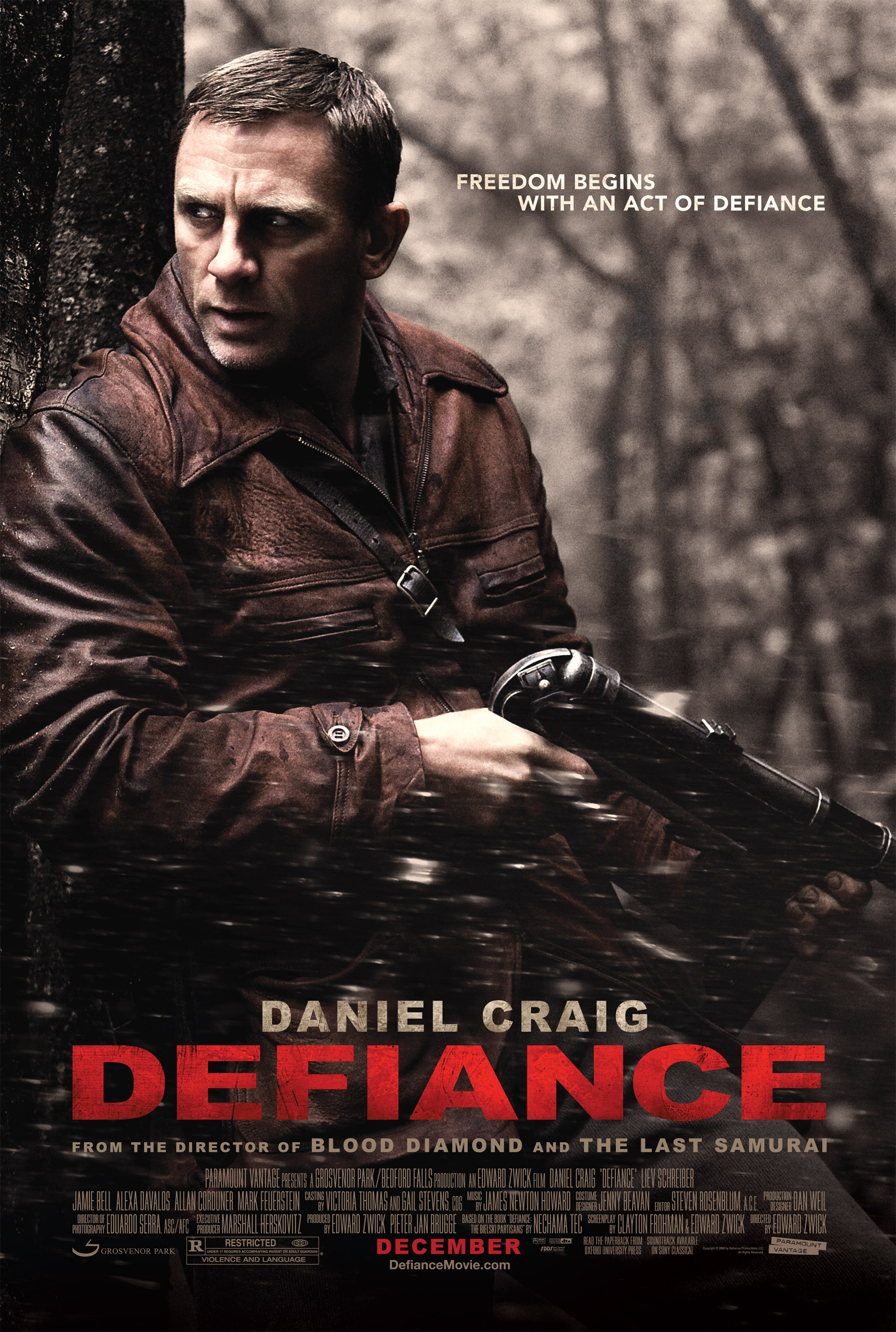 For my next film analysis I decided to review the film 'Defiance'. It is a tale set during the Holocaust, telling the story of two brother who sympathies with the Jews and end up from just trying to survive in a forest, after their village was destroyed by the Nazis, to leading a camp of hundreds of Jew survivors hiding from the Germans until the war is over. The film cast is sprinkled with stars, big names such as Daniel Craig and was directed by Edward Zwick.
The film isn't marketed as a Thriller film, however, I wanted to analyse it because while i was watching i found myself captivated in the suspense and tension of the story.
I wanted to talk about techniques used in this film relating to story and creating suspense. I talk a lot about how films create suspense or tension because it is one of the conventions of the Thriller genre and without creating this tension or suspense it would no longer be a Thriller film. Defiance has the luxury of there already being an overarching tension because of when and where the film is set, during the Holocaust. Constantly throughout the film the audience is worried that the Germans will suddenly arrive and kill everyone or how the Survivors will survive in this massive forest without any food, water or shelter. On top of this there is also animosity between the survivors, creating infighting, dividing the audience and creating bonds between the characters and the audience.
There is one scene that sticks out in my mind after watching this film. The camp had been stuck with typhoid and it is the middle of an Eastern European Winter (Snow, Ice, freezing temperatures). There has been two bullies living in the camp, intimidating other members of the camp and taking more food than they are entitled too. The main character (Daniel Craig) is ill with the virus and hasn't been seen in days. In this time, these bullies have decided to take charge of the camp, against his orders. The scene itself starts with an extraordinarily long line of sick people waiting to receive food, while the bullies eat like kings. Daniel Craig is forced to go and deal with the situation, obviously very weak and tired. The scene ends with Daniel Craig being humiliated before suddenly turning around and shooting the ringleader, the rest of the bullies quickly falling into place. The main reason that this scene sticks out to me is because the audience almost cheers at the death of the ringleader, we feel happy about this person being murdered. This is such a strange and deranged idea that it really made an impact on me.
This film at its core is a WWII Action Thriller. With loads of guns and violence, however with complex undertones of survival, love and politics. I personally really enjoyed this film for those reasons providing a perfect mix of action, dialogue and interaction. While not particularly innovative or groundbreaking both technically or story wise, the film was still a good time.
In conclusion, I found a few different ways to create tension. Rather than environmental things such as music, I could use how the characters interact and what they do will create suspense which i will try to incorporate in my film making.
For my next film analysis I decided to review the film 'Defiance'. It is a tale set during the Holocaust, telling the story of two brother who sympathies with the Jews and end up from just trying to survive in a forest, after their village was destroyed by the Nazis, to leading a camp of hundreds of Jew survivors hiding from the Germans until the war is over. The film cast is sprinkled with stars, big names such as Daniel Craig and was directed by Edward Zwick.The film isn't marketed as a Thriller film, however, I wanted to analyse it because while i was watching i found myself captivated in the suspense and tension of the story.
I wanted to talk about techniques used in this film relating to story and creating suspense. I talk a lot about how films create suspense or tension because it is one of the conventions of the Thriller genre and without creating this tension or suspense it would no longer be a Thriller film. Defiance has the luxury of there already being an overarching tension because of when and where the film is set, during the Holocaust. Constantly throughout the film the audience is worried that the Germans will suddenly arrive and kill everyone or how the Survivors will survive in this massive forest without any food, water or shelter. On top of this there is also animosity between the survivors, creating infighting, dividing the audience and creating bonds between the characters and the audience.
There is one scene that sticks out in my mind after watching this film. The camp had been stuck with typhoid and it is the middle of an Eastern European Winter (Snow, Ice, freezing temperatures). There has been two bullies living in the camp, intimidating other members of the camp and taking more food than they are entitled too. The main character (Daniel Craig) is ill with the virus and hasn't been seen in days. In this time, these bullies have decided to take charge of the camp, against his orders. The scene itself starts with an extraordinarily long line of sick people waiting to receive food, while the bullies eat like kings. Daniel Craig is forced to go and deal with the situation, obviously very weak and tired. The scene ends with Daniel Craig being humiliated before suddenly turning around and shooting the ringleader, the rest of the bullies quickly falling into place. The main reason that this scene sticks out to me is because the audience almost cheers at the death of the ringleader, we feel happy about this person being murdered. This is such a strange and deranged idea that it really made an impact on me.
This film at its core is a WWII Action Thriller. With loads of guns and violence, however with complex undertones of survival, love and politics. I personally really enjoyed this film for those reasons providing a perfect mix of action, dialogue and interaction. While not particularly innovative or groundbreaking both technically or story wise, the film was still a good time.
In conclusion, I found a few different ways to create tension. Rather than environmental things such as music, I could use how the characters interact and what they do will create suspense which i will try to incorporate in my film making.
Preliminary Pt.2
Editing the Prelim.
.jpg) We had to edit the footage for out preliminary task, cutting down on bits we didn't like or want, adding music and audio as well as graphics and visual effects. Because I had no experience with editing before rather than taking an important role here I decided to take a back seat role and learn the basics now so that later on i can do some more complex edits for the main task. Each member of the group was assigned a specific area to work on, such as lighting and audio. We took a while trying to find appropriate music as we felt this should be perfect. I personally think we have done this and it adds to the final product. Speaking of the final product...
We had to edit the footage for out preliminary task, cutting down on bits we didn't like or want, adding music and audio as well as graphics and visual effects. Because I had no experience with editing before rather than taking an important role here I decided to take a back seat role and learn the basics now so that later on i can do some more complex edits for the main task. Each member of the group was assigned a specific area to work on, such as lighting and audio. We took a while trying to find appropriate music as we felt this should be perfect. I personally think we have done this and it adds to the final product. Speaking of the final product...Friday, 17 January 2014
Jaws
Daaaa Dun...
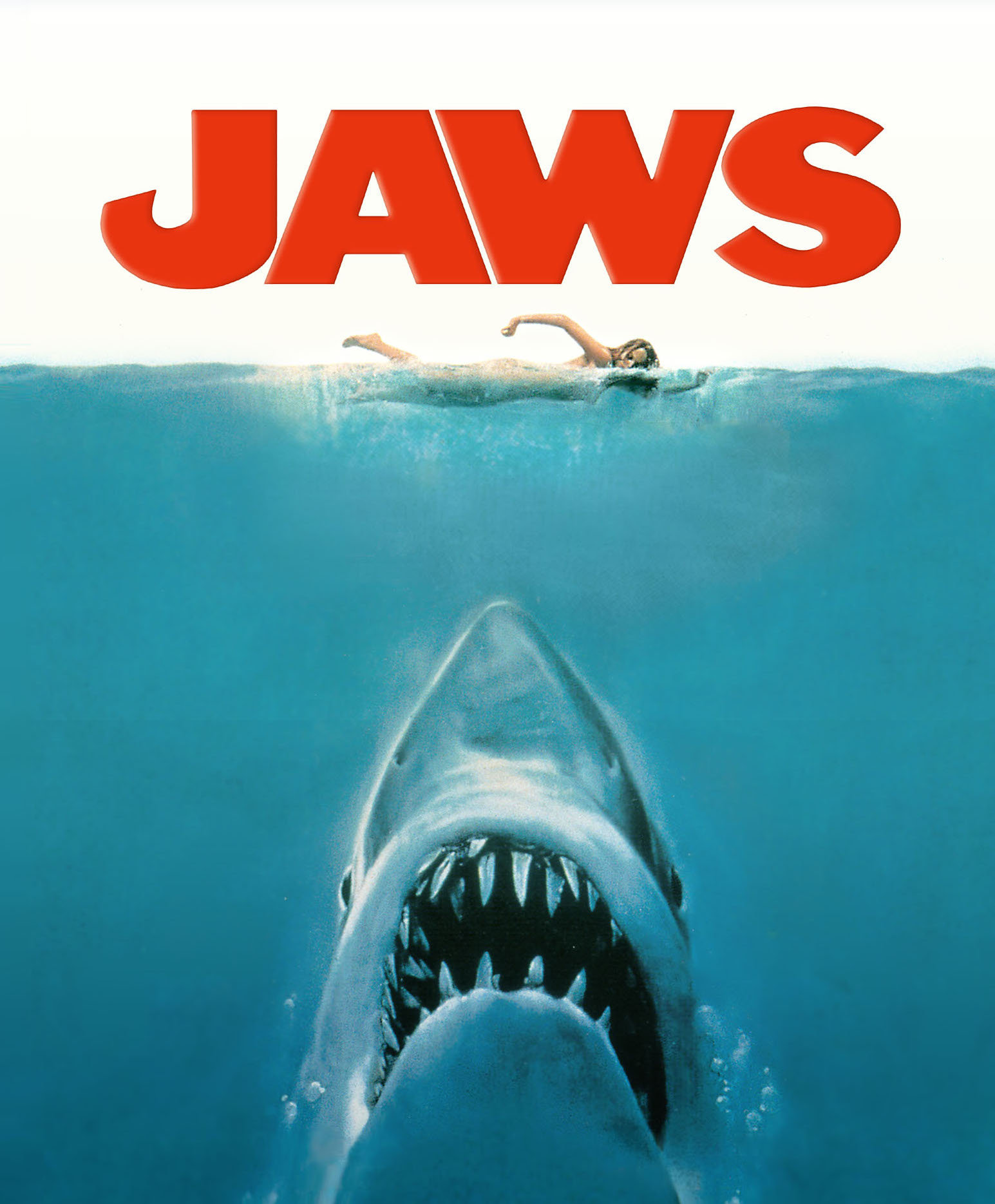 Jaws was one of the films that nowadays define the Thriller genre. Probably the finest example of building suspense and tension that I personally have ever seen. This film had a huge impact on me personally. I first saw the film when I was 12, far too young, and to this day has caused an irrational fear of sharks. It was directed by Steven Spielberg in 1975.
It is the tale of a small seaside community being terrorized by a killer shark. Police Deputy Martin Brody discovers the mutilated remains of a young woman torn apart by the murderous shark. When Brody informs the mayor he refuses to close the beaches due to the booming summer tourist trade which is generating a large amount of income for the town. After a few more deaths a bounty is put on the shark, attracting amateur shark hunters. One such shark hunter, Quint, takes Brody and a marine biologist, Hooper, to kill the beast.
Spielberg's most iconic way of creating tension was the use of music, composed by John Williams. The world famous piece of music that still puts people on edge whenever it is heard. This piece of music is synonymous with suspense and tension. The way that it begins slowly and speeds up is a metaphor for how the tension in the audience builds. The reason it is so important is because of how it has such a profound effect on the audience. If I was going to take anything from this film, it would be the use of music to create atmosphere.
Another technique that this film uses was that we only ever caught glimpses of the shark, not seeing the entire monster until the very end of the film. Nowadays this is a rather common technique both in films and other media, such as video games. However at the time it was an innovative method of making a monster scary without having to spend money on visual effects or props. Since we are a making a Thriller, not a Horror, there should be no need to have to find ways to not show a monster. However, I will also use the idea that the audiences imagination will create the tension by themselves. Meaning we don't have to show any particularly expensive or technically difficult things, such as fights or fancy Special FX.
In conclusion, Jaws was a terrifying film that chills me to this day, not because it was bad, but rather it scared me to such a large degree. I will take the techniques used by Spielberg to create tension, such as not showing the shark/baddie and having the main character an average guy against horrific odds. I will also keep in mind the effectiveness of music to create suspense and tension.
Friday, 10 January 2014
Camera Tricks
Angles...
Different angles and shots are always used in film to show specific parts of a scene, convey a meaning or create an effect either on the viewer or in the film.
Basic Camera Shots

These shots are the basic ones used in every film. Similar to High and Low angle shots, they each frame a certain character in a specific way. Different genre of film may prefer to use one shot over an other; for example, The Wild West Genre love the extreme close up shot during Mexican standoffs. Medium shot/Medium Close up are very common shots that are used very often because they don't have any effect on what the audience thinks about a character, whereas the rest show various aspects of how we should feel about the character. For example, similar to the High Angle shot, the Extreme wide shot makes the audience feel that the character is small and powerless. Or , more literally, far away. Whereas a close up would introduce a character and and Extreme close up would make the audience feel tense and uncomfortable, like someone is getting in their personal space.

Shot Reverse Shot
A Shot Reverse Shot (S-R-S) is a very common technique used in films when two characters are interacting. It is when in one shot, a character is shown to be looking at another character, and then in the next shot the other character is looking back at him. This is a very simple yet effective technique used in conversation.
 High Angle Shot
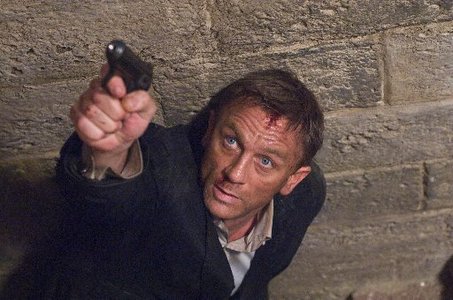
In film, a High Angle Shot is a very explanatory term for when the camera shot is above the eyeline of a character. At this angle it is very common for the focus on the character/object to be lost due to it getting 'swallowed up' in the setting. This means that this shot makes the character/object seem small and powerless. It is often a very dramatic shot.
 Low Angle Shot
A Low Angle Shot is a camera shot that is below the eyeline of a character. This shot implies a character is powerful, usually menacing. It is often used to first show the antagonist of a film. It is also used to show if one character is more powerful, plot wise, than that of another character.
Other Types of Camera Shot
There are a few other types of shot that are used in film far less often. Such as Point-of-View Shots and Establishing Shots. These types of shot explain themselves and when they should be used, if a
Different angles and shots are always used in film to show specific parts of a scene, convey a meaning or create an effect either on the viewer or in the film.
Basic Camera Shots
These shots are the basic ones used in every film. Similar to High and Low angle shots, they each frame a certain character in a specific way. Different genre of film may prefer to use one shot over an other; for example, The Wild West Genre love the extreme close up shot during Mexican standoffs. Medium shot/Medium Close up are very common shots that are used very often because they don't have any effect on what the audience thinks about a character, whereas the rest show various aspects of how we should feel about the character. For example, similar to the High Angle shot, the Extreme wide shot makes the audience feel that the character is small and powerless. Or , more literally, far away. Whereas a close up would introduce a character and and Extreme close up would make the audience feel tense and uncomfortable, like someone is getting in their personal space.
Shot Reverse Shot
A Shot Reverse Shot (S-R-S) is a very common technique used in films when two characters are interacting. It is when in one shot, a character is shown to be looking at another character, and then in the next shot the other character is looking back at him. This is a very simple yet effective technique used in conversation.
High Angle ShotIn film, a High Angle Shot is a very explanatory term for when the camera shot is above the eyeline of a character. At this angle it is very common for the focus on the character/object to be lost due to it getting 'swallowed up' in the setting. This means that this shot makes the character/object seem small and powerless. It is often a very dramatic shot.
Low Angle ShotA Low Angle Shot is a camera shot that is below the eyeline of a character. This shot implies a character is powerful, usually menacing. It is often used to first show the antagonist of a film. It is also used to show if one character is more powerful, plot wise, than that of another character.
Other Types of Camera Shot
There are a few other types of shot that are used in film far less often. Such as Point-of-View Shots and Establishing Shots. These types of shot explain themselves and when they should be used, if a
Thursday, 9 January 2014
The Rules
The Rules...
In film making there are several different 'rules' to follow to create watchable piece of film. Here I will talk about each of the major ones, beginning with the 180-Degree rule.
The 180-Degree Rule
 When two characters are talking to each other, there is a rule called the 180-Degree rule which tells us that we should only place the cameras on one side of the conversation. An imaginary axis between the characters is formed and the camera should only remain on one of the two sides of this axis. The reason that we only keep the camera angles on one side is because it gives us a sense of where the characters are relative to each other. If the 180-Degree rule is broken it can result in having adverse affects on the user such as dizziness and in extreme cases nausea. This, often called 'Reverse Cut', disorients the audience by presenting an opposing view of the action in a scene and consequently alters the perspective of the action and the spatial orientation established in the original shot However, sometimes this rule can be deliberately broken be the director to create these effects on the audience. It is often broken to show that the protagonist is dazed or disoriented. Breaking this rule is called 'Jumping/Crossing the Line'
 The 30-Degree Rule
The 30-Degree rule is the rule that the camera should move at least 30° between shots of the same object. The idea is that this rule differentiates the shots enough so that there seems to be a reason for the shot to exist. If two shots don't follow this rule it can cause one of the shots to feel pointless and for their to be no reason that it should be there. However this also be broken to create several jump cuts around a single object, this could be for plot reasons as well as to try and focus on the object. Drawing importance to it. However, personally I feel that the same effect could be created by just a long lasting shot focusing on the same object.
Match on Action
Match on Action, Match on or Cutting on Action are all terms for the same idea. That idea is that a scene would keep flowing even when then the shot changes. For example, if these is a shot of someone drinking some water and the shot changes, the same character should still be drinking water in the next shot. This is all part of a wider subject called 'Continuity'.
Eye Line Match
 This is a simple rule used when two characters are talking. The technique is the premise that the audience want to see what the character onscreen is seeing. For example, a man is looking off-screen to his left, and then the film cuts to a television that he is watching. Another way that it is used is when two characters are speaking and they are at different heights. When the shot is from behind the head of the taller character it would be looking down on the shorter character, and vice versa. Conveying the difference in heights.
Continuity
Continuity is very important in film making because it makes the piece believable and more realistic. If continuity is broken it instantly breaks the immersion of the film, and takes the audience out of it. Whereas we want the audience to be absorbed in the film. There can be major errors in continuity, such as in one shot a character wearing a red shirt and wearing a yellow one in the next., or minor ones that are harder to notice on film, such as a change of jewelry between shots or a slight growth in facial hair on a male character. There are several things that must be followed to ensure that continuity is achieved. Simply, the scene must flow naturally with no noticeable differences between shots. This makes the scene realistic and believable.
These rules are essential in film making to know for me. I will use them to help guide me on how to frame each of the scenes and also knowing what not to do. Hopefully this will mean i will avoid any confusing or disorienting camera shots.
In film making there are several different 'rules' to follow to create watchable piece of film. Here I will talk about each of the major ones, beginning with the 180-Degree rule.
The 180-Degree Rule
When two characters are talking to each other, there is a rule called the 180-Degree rule which tells us that we should only place the cameras on one side of the conversation. An imaginary axis between the characters is formed and the camera should only remain on one of the two sides of this axis. The reason that we only keep the camera angles on one side is because it gives us a sense of where the characters are relative to each other. If the 180-Degree rule is broken it can result in having adverse affects on the user such as dizziness and in extreme cases nausea. This, often called 'Reverse Cut', disorients the audience by presenting an opposing view of the action in a scene and consequently alters the perspective of the action and the spatial orientation established in the original shot However, sometimes this rule can be deliberately broken be the director to create these effects on the audience. It is often broken to show that the protagonist is dazed or disoriented. Breaking this rule is called 'Jumping/Crossing the Line'The 30-Degree RuleThe 30-Degree rule is the rule that the camera should move at least 30° between shots of the same object. The idea is that this rule differentiates the shots enough so that there seems to be a reason for the shot to exist. If two shots don't follow this rule it can cause one of the shots to feel pointless and for their to be no reason that it should be there. However this also be broken to create several jump cuts around a single object, this could be for plot reasons as well as to try and focus on the object. Drawing importance to it. However, personally I feel that the same effect could be created by just a long lasting shot focusing on the same object.
Match on Action
Match on Action, Match on or Cutting on Action are all terms for the same idea. That idea is that a scene would keep flowing even when then the shot changes. For example, if these is a shot of someone drinking some water and the shot changes, the same character should still be drinking water in the next shot. This is all part of a wider subject called 'Continuity'.
Eye Line Match
This is a simple rule used when two characters are talking. The technique is the premise that the audience want to see what the character onscreen is seeing. For example, a man is looking off-screen to his left, and then the film cuts to a television that he is watching. Another way that it is used is when two characters are speaking and they are at different heights. When the shot is from behind the head of the taller character it would be looking down on the shorter character, and vice versa. Conveying the difference in heights.Continuity
Continuity is very important in film making because it makes the piece believable and more realistic. If continuity is broken it instantly breaks the immersion of the film, and takes the audience out of it. Whereas we want the audience to be absorbed in the film. There can be major errors in continuity, such as in one shot a character wearing a red shirt and wearing a yellow one in the next., or minor ones that are harder to notice on film, such as a change of jewelry between shots or a slight growth in facial hair on a male character. There are several things that must be followed to ensure that continuity is achieved. Simply, the scene must flow naturally with no noticeable differences between shots. This makes the scene realistic and believable.
These rules are essential in film making to know for me. I will use them to help guide me on how to frame each of the scenes and also knowing what not to do. Hopefully this will mean i will avoid any confusing or disorienting camera shots.
Subscribe to:
Comments (Atom)