Here is the finished product. Its been a long way since my first post last year but I think it was worth it and I have learnt a lot about Thriller films as well as the film industry in general. I am rather proud of this blog and everything that I have put onto it.
Sunday, 30 March 2014
It's done
Finally Finished!...
Here is the finished product. Its been a long way since my first post last year but I think it was worth it and I have learnt a lot about Thriller films as well as the film industry in general. I am rather proud of this blog and everything that I have put onto it.
Here is the finished product. Its been a long way since my first post last year but I think it was worth it and I have learnt a lot about Thriller films as well as the film industry in general. I am rather proud of this blog and everything that I have put onto it.

Friday, 28 March 2014
Editing Pt. 4
Oh the fickle hand of fate...
The plan was for me and Sam Yip to finish off the editing with small finishing touches that will tie the whole piece together. BUT to my amazement, as I was about to do that. Adobe Premiere completely locked me out, not opening or working at all. This meant that we couldn't finish the editing. We were nearing the deadline so we all agreed to let Sam take the footage home and edit it on his home laptop. Therefore I cannot talk about the process of editing at this stage but I can talk about the changes he made.
He added a CCTV camera effect to a part of the film which I thought looked good. He also editing out the bad colour correction job that I did rather badly. There are also several smaller changes that he made which aren't worth talking about.
The plan was for me and Sam Yip to finish off the editing with small finishing touches that will tie the whole piece together. BUT to my amazement, as I was about to do that. Adobe Premiere completely locked me out, not opening or working at all. This meant that we couldn't finish the editing. We were nearing the deadline so we all agreed to let Sam take the footage home and edit it on his home laptop. Therefore I cannot talk about the process of editing at this stage but I can talk about the changes he made.
He added a CCTV camera effect to a part of the film which I thought looked good. He also editing out the bad colour correction job that I did rather badly. There are also several smaller changes that he made which aren't worth talking about.
Editing Pt.3
Finally done. Almost...
This is the third part of four 'editing stages' that I made for myself, at this point we needed to add visual effects such as the opening credits and any colour correction we want.

An example of colour correction that I at least tried to do was to when we had some footage with a window in the background which unfortunately lit the entire shot. This ruined continuity so it needed to be fixed. After experimenting with the premiere software I managed to get a satisfying result however I still don't feel completely happy with it because there is still a noticeable difference. due to a lack of time however we had to accept this. Instead I then thought to try and find an alternate piece of footage to use here. You can see the image above is where I had to edit the lighting.

Then I had to add any visual effects that we wanted. Which luckily for me wasn't that big of a job. All I had to do was to add the opening credits as well as the title screen to the film and then I would be almost done. This was simply done by overlaying the text in the desired font which can be seen in the above picture. We chose this one because when we looked at other Thriller films we found a trend where the font would be thin and not very eye catching. After some thought I realised that it could be reflective of a few conventions. Namely, how there is always a mystery that involves small details that are easy to miss. It is also very understated and subtle. The way that it looks as if it was written on the film also gives a sense of Film Noir.
This is the third part of four 'editing stages' that I made for myself, at this point we needed to add visual effects such as the opening credits and any colour correction we want.
An example of colour correction that I at least tried to do was to when we had some footage with a window in the background which unfortunately lit the entire shot. This ruined continuity so it needed to be fixed. After experimenting with the premiere software I managed to get a satisfying result however I still don't feel completely happy with it because there is still a noticeable difference. due to a lack of time however we had to accept this. Instead I then thought to try and find an alternate piece of footage to use here. You can see the image above is where I had to edit the lighting.
Then I had to add any visual effects that we wanted. Which luckily for me wasn't that big of a job. All I had to do was to add the opening credits as well as the title screen to the film and then I would be almost done. This was simply done by overlaying the text in the desired font which can be seen in the above picture. We chose this one because when we looked at other Thriller films we found a trend where the font would be thin and not very eye catching. After some thought I realised that it could be reflective of a few conventions. Namely, how there is always a mystery that involves small details that are easy to miss. It is also very understated and subtle. The way that it looks as if it was written on the film also gives a sense of Film Noir.
Thursday, 27 March 2014
Editing Pt.2
Its all coming together...
I enjoyed this part of the editing process much more than the previous step, I was tasked with interlacing my Piano scene footage into the main piece. The idea was that it would be in the background, but also provide a brief lull in the action taking place on screen. I referred to my notes and all my previous research a lot during this process.
The biggest difficulty was to get the audio to sync with the visuals. If the Pianist plays a note on screen we need to hear that note as he plays it, not a second or two afterwards. This proved a massive challenge however I feel that I managed to get around this with some very small tweaking.
When I was stuck I very often referred back to my notes and research to see how I could handle the problem I was given. For example, there is a murder scene, obviously this is a pivotal part of the opening because it is the 'explosion' or burst of suspense. This idea is one taken from Psycho, a film I watched and reviewed much earlier in the year. In Psycho Hitchcock uses a long build of tension followed by a quick burst of action. This is a both scary and effective way of using tension. I tried to use it here because of some of the quotes I got from my questionnaire support the idea that people want to be thrilled and scared. I spent an extra hour fine tuning it so it looks just perfect.

We have also made a decision on the typography of the title and how we plan to pull that off. I will talk about that in my next, and final, post about editing where I complete the visual effects and the finishing touches. The reason I mention it is because of how they tie in with how I ended the whole film (as shown above.) Personally I am rather proud of how it end because I managed to get the timing just perfect. Something happens (No spoilers!) and then the screen goes black, the title fades in. Then a hard cut to the pianist playing the last note. I love it so much because it fits with the timing perfectly.
I cannot overstate the usefulness of analysing the film openings. Especially 'Source Code' because of how it opens in a very similar way. Being able to refer to how another film had done it as well as doing it right.
I enjoyed this part of the editing process much more than the previous step, I was tasked with interlacing my Piano scene footage into the main piece. The idea was that it would be in the background, but also provide a brief lull in the action taking place on screen. I referred to my notes and all my previous research a lot during this process.
The biggest difficulty was to get the audio to sync with the visuals. If the Pianist plays a note on screen we need to hear that note as he plays it, not a second or two afterwards. This proved a massive challenge however I feel that I managed to get around this with some very small tweaking.
When I was stuck I very often referred back to my notes and research to see how I could handle the problem I was given. For example, there is a murder scene, obviously this is a pivotal part of the opening because it is the 'explosion' or burst of suspense. This idea is one taken from Psycho, a film I watched and reviewed much earlier in the year. In Psycho Hitchcock uses a long build of tension followed by a quick burst of action. This is a both scary and effective way of using tension. I tried to use it here because of some of the quotes I got from my questionnaire support the idea that people want to be thrilled and scared. I spent an extra hour fine tuning it so it looks just perfect.
We have also made a decision on the typography of the title and how we plan to pull that off. I will talk about that in my next, and final, post about editing where I complete the visual effects and the finishing touches. The reason I mention it is because of how they tie in with how I ended the whole film (as shown above.) Personally I am rather proud of how it end because I managed to get the timing just perfect. Something happens (No spoilers!) and then the screen goes black, the title fades in. Then a hard cut to the pianist playing the last note. I love it so much because it fits with the timing perfectly.
I cannot overstate the usefulness of analysing the film openings. Especially 'Source Code' because of how it opens in a very similar way. Being able to refer to how another film had done it as well as doing it right.
Editing Pt. 1
Trimming the fat...
Its official! editing has finally begun. We were all tasked with editing certain parts of the piece, such as the music or assassination scene. For me I was placed in charge of cutting down unwanted parts (I referred to this as trimming the fat) the pianist footage and finishing touches at the end of the process.

The first thing was to edit of bits that we didn't want, such as bad takes, laughing and shaving down the time between when someone says action to when some action actually happens in front of the camera.

Its official! editing has finally begun. We were all tasked with editing certain parts of the piece, such as the music or assassination scene. For me I was placed in charge of cutting down unwanted parts (I referred to this as trimming the fat) the pianist footage and finishing touches at the end of the process.
This proved to be rather easy but time consuming because I had to trawl through each piece of footage to find the needed pieces. The majority of which was either a blooper or a piece of setup.
Wednesday, 26 March 2014
Typography
Lettering...
Now that we had decided a title we needed to figure out how we wanted it to look. To this end we wanted something that both fit with the title and stood out. We all felt a thin lettering would look best, almost like smoke. After having that idea we played with the idea of having lettering with smoke in it however we all agreed it looked rather awful.
After being stuck for a while I looked at some examples of titles from other Thrillers, and the ones I liked seemed to have very thin, minimalist lettering for their titles. We have agreed to copy this idea but haven't yet found just the correct font. We have started the edit and I will update the blog on the chosen font once we have found the font that we want to use.
Now that we had decided a title we needed to figure out how we wanted it to look. To this end we wanted something that both fit with the title and stood out. We all felt a thin lettering would look best, almost like smoke. After having that idea we played with the idea of having lettering with smoke in it however we all agreed it looked rather awful.
After being stuck for a while I looked at some examples of titles from other Thrillers, and the ones I liked seemed to have very thin, minimalist lettering for their titles. We have agreed to copy this idea but haven't yet found just the correct font. We have started the edit and I will update the blog on the chosen font once we have found the font that we want to use.
Titling
[Insert witty title here...]
For me this was the very hardest part of the whole course. Picking a title for the piece. I find it impossible to do, I can never think of a good one and have to resort to someone else for help. However, thankfully I am in a group for this task so after bouncing ideas of each other for the better part of an hour we narrowed it down to;
RESONANCE
ECHO
THE PIANIST
They all relate to the film in some way, either symbolically or literally. One of the stand out features of this film idea is that there is no dialogue, only music. Therefore my personal favourite, as well as the rest of the groups favourite, is Resonance. We hope to make the film resonate within the viewer so we felt that it just fit perfectly.
For me this was the very hardest part of the whole course. Picking a title for the piece. I find it impossible to do, I can never think of a good one and have to resort to someone else for help. However, thankfully I am in a group for this task so after bouncing ideas of each other for the better part of an hour we narrowed it down to;
RESONANCE
ECHO
THE PIANIST
They all relate to the film in some way, either symbolically or literally. One of the stand out features of this film idea is that there is no dialogue, only music. Therefore my personal favourite, as well as the rest of the groups favourite, is Resonance. We hope to make the film resonate within the viewer so we felt that it just fit perfectly.
Resonance
ˈrɛz(ə)nəns/
noun
noun: resonance; plural noun: resonances
- 1.the quality in a sound of being deep, full, and reverberating."the resonance of his voice
As I said, it fits perfectly.
I love the title.
Early Feedback
NO! you can't see it yet! Its not finished...
I really wanted to get some very early feedback on the finished film so I gave a few people the very exclusive, privileged, expensive opportunity to come behind the scenes and view some of the footage we gathered. Responses were positive, saying how they enjoyed the camera angles as well as the costumes. The plot was also well understood, this was vitally important to us because of the lack of dialogue and complete reliance on music for any kind of audio. Therefore to know that the piece can stand on its own without anything else. Editing is due to start very soon.
I really wanted to get some very early feedback on the finished film so I gave a few people the very exclusive, privileged, expensive opportunity to come behind the scenes and view some of the footage we gathered. Responses were positive, saying how they enjoyed the camera angles as well as the costumes. The plot was also well understood, this was vitally important to us because of the lack of dialogue and complete reliance on music for any kind of audio. Therefore to know that the piece can stand on its own without anything else. Editing is due to start very soon.
The Questionnaire
6 small questions...
 There were 25 people surveyed, These were the ratio's that we received back;
14 to 16 Years = 3
17 to 20 Years = 12
20 to 40 Years = 6
40 to 60 Years = 3
60+ Years old = 1
This is important because it gives as an idea of what age demographics like a particular thing. It also shows that we collected information from a very wide range of people. I felt that this was important because film is a thing that all ages can enjoy and thus all ages should be taken into account. However, i did try to ask more people from the target demographic of Thriller films, which is usually 16 - 25 year olds, this is why there is a disproportionate amount of these people when compared to the rest of the age groups.
I wanted to try and get a much wider group of opinions from a wider range of people, rather than just interviewing a few peers and teachers. As such I put together a Questionnaire and I sent it to 25 different people. Surprisingly they actually all responded and gave both interesting and expected responses. The youngest person surveyed was my niece, who is 14, and the oldest was my grandmother, who is 73.
Question 1 - What is your age?
14 to 16 Years = 3
17 to 20 Years = 12
20 to 40 Years = 6
40 to 60 Years = 3
60+ Years old = 1
This is important because it gives as an idea of what age demographics like a particular thing. It also shows that we collected information from a very wide range of people. I felt that this was important because film is a thing that all ages can enjoy and thus all ages should be taken into account. However, i did try to ask more people from the target demographic of Thriller films, which is usually 16 - 25 year olds, this is why there is a disproportionate amount of these people when compared to the rest of the age groups.
Question 2 - What is your favorite genre of film?

I felt that this question is important because we can cross reference it with the differing ages of people involved. The majority of people favored Comedy films over any other, telling me that it a genre that appeals to wide range of people and ages, however, comedy is a very subjective thing that will differ between people. Meaning that while a lot of people like comedy in general, not all of them will like the same 'type' of comedy, i.e. Slapstick humor rather than dark humor. Fortunately, the next most highly favored genre is Thriller, the genre that my group is currently filming. Predictably, the majority of these people were in the
17 - 25 year age bracket.
Question 3 - How often do you watch films?
 I wanted to try to understand who watches film more than I already did. To try and do this I wanted to see how often these people watched films. Interestingly, both the top and bottom ends(Oldest and youngest people) of the spectrum rarely watched films at all. The majority of people who watch a lot of films are the younger crowd, such as 15 to 19 year olds. This is because of their larger amount of free time as well as how almost all of their income is disposable. This is once again beneficial for me because it tells me that my target audience is also the largest consumer of films.
Question 4 - When watching a Thriller film, what do yo want it to make you feel emotionally?
This one is impossible to show on a graph so I will instead use my 4 favorite quotes from the people surveyed.
Miranda Sharre - 16 - "When I watch a Thriller I want to be one the edge of my seat he whole time, never knowing what will happen next."
Chris Smith - 17 - "*Sigh*...Thrilled...i suppose."
Glynis Ferriby - 73 - "I would want a mystery, with a little bit a scary thrown in there to keep me on my toes."
Kim Keeping - 23 - "I much prefer creepy to scary, plant an idea and let the imagination do the rest."
This was a very fun area to look at because it got to get a glimpse into the personalities of the people as well as get their opinions in their own words. I find that this will be very useful, especially Kim Keeping's post because it gives me an excellent idea on how to piece together the final product. The idea that the unknown is scarier that than the actual monster. The question is better than the answer. I opens a whole new range of opportunities that I plan to exploit during editing.
Question 5 - How do you usually hear about a film
 The majority of people found films by seeing a TV advert about them, or they saw an ad on YouTube or Facebook. I wanted to find this out because I needed to see how I could market my project to people. Unfortunately I am not able to advertise using either of these two methods because they are both far too expensive. Posters will also require for me to make them, print them, and put them around my area. This is far too time consuming and costly for a student film like ours. Therefore the film would almost entirely be spread by word of mouth of social media sites such as Facebook and Twitter. The reason I am considering this at all is because it relates to one of the final evaluation questions which I will complete at the very end of the blog.
Question 6 - Do you find that you can usually predict the outcome of films?

I felt that this question is important because we can cross reference it with the differing ages of people involved. The majority of people favored Comedy films over any other, telling me that it a genre that appeals to wide range of people and ages, however, comedy is a very subjective thing that will differ between people. Meaning that while a lot of people like comedy in general, not all of them will like the same 'type' of comedy, i.e. Slapstick humor rather than dark humor. Fortunately, the next most highly favored genre is Thriller, the genre that my group is currently filming. Predictably, the majority of these people were in the
17 - 25 year age bracket.
Question 3 - How often do you watch films?
Question 4 - When watching a Thriller film, what do yo want it to make you feel emotionally?
This one is impossible to show on a graph so I will instead use my 4 favorite quotes from the people surveyed.
Miranda Sharre - 16 - "When I watch a Thriller I want to be one the edge of my seat he whole time, never knowing what will happen next."
Chris Smith - 17 - "*Sigh*...Thrilled...i suppose."
Glynis Ferriby - 73 - "I would want a mystery, with a little bit a scary thrown in there to keep me on my toes."
Kim Keeping - 23 - "I much prefer creepy to scary, plant an idea and let the imagination do the rest."
This was a very fun area to look at because it got to get a glimpse into the personalities of the people as well as get their opinions in their own words. I find that this will be very useful, especially Kim Keeping's post because it gives me an excellent idea on how to piece together the final product. The idea that the unknown is scarier that than the actual monster. The question is better than the answer. I opens a whole new range of opportunities that I plan to exploit during editing.
Question 5 - How do you usually hear about a film
Question 6 - Do you find that you can usually predict the outcome of films?
I felt that this is important because one of the most important elements of suspense is surprise. Without surprise there is no scare or tension. I wanted to try and see how adept people were at guessing plot points before they happen. Unfortunately, the data that I got back is rather useless. It tells me the approx. half of the population are good at predicting the outcomes of films. I believe that this ties into the use of cliches as well as bad plot twists. If i'm to take anything away from this it will be to try to be unpredictable, try to film the unexpected. So that the audience will be surprised, achieving the desired affect on them.
Monday, 24 March 2014
Interview
Eliot Nash, Student, 17, Film lover...
We felt that it was very important to try and get opinions from other people about our chosen genre, film etc... to get a consensus on how people feel about this topic. We put together a few questions for an interview and found our friend Eliot Nash...
We felt that it was very important to try and get opinions from other people about our chosen genre, film etc... to get a consensus on how people feel about this topic. We put together a few questions for an interview and found our friend Eliot Nash...
This interview made a lot of sense.
Film Opening Analysis 4
Source Code...
 I enjoyed the way which this film opened because of how it is rather similar to how i hope my final task will look like. It opens to a lot of grand, wide shots of a city which i assume to be Chicago. The reason it is similar is because of how the footage is layered on top of some omnibus, creepy music that actually made me rather uncomfortable. Mixed in with the footage are long, panning shots of a train. This draws a focus onto this train and associates the sense of danger brought with the eerie music to this train.
We then join the main protagonist as he suddenly wakes up on the train and is very obviously confused, the reflects the mood of the audience as we are also confused with what is happening. This helps us relate the main character.
The main thing which i feel i took away from the opening of Source Code is how the music created this sense of nervousness in me, and i now hope to recreate this effect in my own piece to some extent.
I enjoyed the way which this film opened because of how it is rather similar to how i hope my final task will look like. It opens to a lot of grand, wide shots of a city which i assume to be Chicago. The reason it is similar is because of how the footage is layered on top of some omnibus, creepy music that actually made me rather uncomfortable. Mixed in with the footage are long, panning shots of a train. This draws a focus onto this train and associates the sense of danger brought with the eerie music to this train.We then join the main protagonist as he suddenly wakes up on the train and is very obviously confused, the reflects the mood of the audience as we are also confused with what is happening. This helps us relate the main character.
The main thing which i feel i took away from the opening of Source Code is how the music created this sense of nervousness in me, and i now hope to recreate this effect in my own piece to some extent.
Thursday, 20 March 2014
Film Opening Analysis 3
Taken...
Taken is an Action/Thriller film that was released in 2008 starring Liam Neeson as the main character Brian Mills. We see the film open with old home movies of a young girls birthdays. Brian Mills then wakes up on his couch with a framed picture of his daughter in his hands. This tells a lot about the character an portrays a flaw in him. He can't let go of the past. This idea of a flawed protagonist is a common convention of the Thriller genre. This is further shown later on in the opening when he buys a karaoke machine for his daughter's 17th birthday, knowing that she wanted to be a singer when she was 12. He also then wraps it in clown gift wrap, corroborating how he thinks of his 17 year old daughter as his baby girl rather than the young woman she actually is.
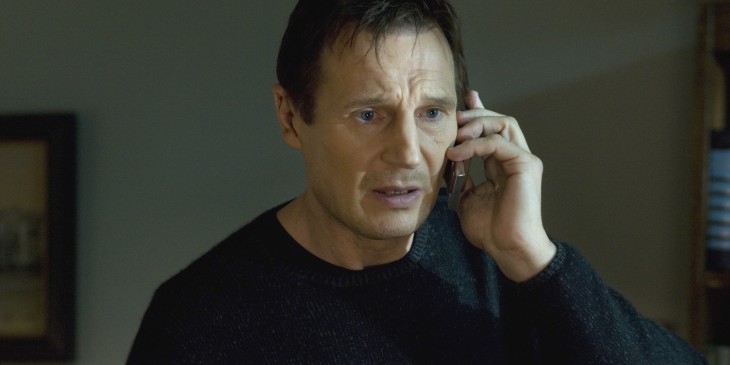
I don't feel like i can take anything away from this plot-wise but the editing had sparked an idea in my head on how to properly edit the piano and assassin scenes together in my head. The idea of a flawed protagonist isn't a new idea and i don't really see how we could incorporate this into my idea due to how we wont have any dialogue or any named characters.
Taken is an Action/Thriller film that was released in 2008 starring Liam Neeson as the main character Brian Mills. We see the film open with old home movies of a young girls birthdays. Brian Mills then wakes up on his couch with a framed picture of his daughter in his hands. This tells a lot about the character an portrays a flaw in him. He can't let go of the past. This idea of a flawed protagonist is a common convention of the Thriller genre. This is further shown later on in the opening when he buys a karaoke machine for his daughter's 17th birthday, knowing that she wanted to be a singer when she was 12. He also then wraps it in clown gift wrap, corroborating how he thinks of his 17 year old daughter as his baby girl rather than the young woman she actually is.
I don't feel like i can take anything away from this plot-wise but the editing had sparked an idea in my head on how to properly edit the piano and assassin scenes together in my head. The idea of a flawed protagonist isn't a new idea and i don't really see how we could incorporate this into my idea due to how we wont have any dialogue or any named characters.
Wednesday, 19 March 2014
Film Opening Analysis 2
Gravity...
Gravity is a Thriller/Drama set in the final frontier, space. The films opens with three astronauts working on the Hubble telescope. The captain (George Clooney) is joking around with the other two, trying to comfort Dr.Stone (Sandra Bullock) who is in space for the first time. A Russian satellite then self destructs nearby and throws a massive debris field at the astronauts, causing havoc and throwing Dr.Stone out into space, separated from her team. She is then alone, in space with no one to help her.
The entire opening to gravity is filmed in one, very long, 13 minutes shot with no cuts of any kinds. This is a very unique way of opening a film but it creates a very good precedent for the rest of the film. It creates the feeling that the camera is floating around in space while watching the astronauts. This is a very interesting but very weird way to create tension in a film. The other thing that creates this kind of tension is the lack of music. This is a fascinating idea when a film will purposely take something away to create a specific effect on the audience. In this case the complete lack of any 'music' represents the silent vacuum of space. Is contrasts with the chaos of the debris colliding with a space craft. This creates an eerie sense of suspense.
There are a few conventions at use here, such as conveying the protagonist (Sandra Bullock) as a 'weak' character. With a flaw that she must overcome, in this case, both her inexperience and fear. They also build tension to create specific effects in the audience, such as fear and suspense.

The thing that I will take away from Gravity is the idea of purposely removing an aspect of the film, i.e. the music, to create tension and 'eeriness'.
There are a few conventions at use here, such as conveying the protagonist (Sandra Bullock) as a 'weak' character. With a flaw that she must overcome, in this case, both her inexperience and fear. They also build tension to create specific effects in the audience, such as fear and suspense.
Tuesday, 18 March 2014
Film Opening Analysis 1
 Skyfall...
I wanted to analyse some film openings to see how they use conventions of their genre. The genre of my main task is Thriller so I will focus on analysing films that are part of this genre and how they use conventions and editing to, hopefully giving me ideas on how I should edit my final piece.
The first film that I wanted to analyse was Skyfall. I wanted to do Skyfall first because It isn't a 'hardcore' Thriller movie, mostly focusing on action. I felt that this would be a good idea because of how it would provide something I could compare the other film openings I look at to.
 Skyfall opens with a mystery. We see 007 searching for some intel. We discover he was too late and has to chase the thief, resulting in a thrilling car, motorbike and train chase sequence ending in Bond taking a bullet to the chest, falling several hundred feet into a lake and is then presumed dead. Not the best start for Jimmy Bond. We expect that a protagonist like 007 to be invincible, but when we see him die, or so we believe, we are thrown off and are confused, not knowing will happen next. While this is not technically a convention of the Thriller Genre but is an effective way of throwing the audience off keeping them engaged. I will keep this idea in mind and look for an opportunity to employ it effectively.
 We then get the signature long, abstract opening credits of every Bond film. This time it is filled with skulls and graves to signify death. It also conveys an idea that the world is ending, with the sky falling, literally, like meteorites. Destroying a large building with two elk (I'm not David Attenborough, may be reindeer, I'm not sure) in front of it. The interesting thing about this opening is how it begins with a death, rather than having it at the end like most other films. This will fit very well with the final idea we had so we will use it in the final piece.
It doesn't use too many conventions of the Thriller Genre specifically, however it does build tension at the beginning using mystery as well as seemingly killing off the main protagonist. These are very interesting ideas that I will keep in mind during filming.
Friday, 14 March 2014
Film Certification
Certification of Films...
 Nowadays, films are categorized into age groups. The age rating that a film receives is the age that a viewer must be to legally view the film, without an adults permission. The organisation that handles these ratings for the UK is called the BBFC (British Board of Film Classification). The reason a film will be given a certain rating depends entirely on the content of the film, this gives the viewers an idea of what to expect in the film. For example, a 3+ would not contain sex and murder, whereas a 15/18 could.
These rating could be seen as both a blessing and a curse. They provide guidelines for what the director can include, these can be seen as limits, but a talented director can build their story around these restrictions. This is something that i can aim to do when i make my films. Quite often when thinking of a film a director will try to get away with as much as he can because the lower the certification the larger the potential audience that can pay to see the film. On the other hand however, a director may write a film and know that they will not be able to get the certification any lower than an 18, therefore they may hold back any potentially dangerous subjects such as illegal drugs to rape.
Films that belong to the same genre tend to all have very similar age ratings. Horror films (Saw, Alien) are almost always 18's, whereas animated films ( Up, Snow White) are usually 3+. There are always exceptions to the rule but generally these films don't often perform that well, this has meant that most directors choose to stay away from these types of film.
 The Main task, which we are currently filming, we consider to have an age rating of 15+. We think this because of the films horror inspirations as well as the themes of murder, assassination and espionage.We could have aimed at a younger audience however we felt we would have to reign in some aspects and it would have detracted from the overall feel and ambiance of the piece. Alternatively we could have gone the complete other way and made it very graphic and gory but this would have been tacky and unnecessary. It would have also spoiled the mood of the piece. Being a 15+ meant we could have a certain degree of freedom to do what we wanted while at the same time putting the necessary restrictions in place to prevent any of us going over board. This is a very good example of how deciding an age rating before even starting production is good. An extra point is that the most common age rating for Thriller films in the UK is 15+, further cementing how we have chosen a good place to build the plot around as well as giving an example of how genres tend to have specific age ratings associated with them.
Nowadays, films are categorized into age groups. The age rating that a film receives is the age that a viewer must be to legally view the film, without an adults permission. The organisation that handles these ratings for the UK is called the BBFC (British Board of Film Classification). The reason a film will be given a certain rating depends entirely on the content of the film, this gives the viewers an idea of what to expect in the film. For example, a 3+ would not contain sex and murder, whereas a 15/18 could.These rating could be seen as both a blessing and a curse. They provide guidelines for what the director can include, these can be seen as limits, but a talented director can build their story around these restrictions. This is something that i can aim to do when i make my films. Quite often when thinking of a film a director will try to get away with as much as he can because the lower the certification the larger the potential audience that can pay to see the film. On the other hand however, a director may write a film and know that they will not be able to get the certification any lower than an 18, therefore they may hold back any potentially dangerous subjects such as illegal drugs to rape.
Films that belong to the same genre tend to all have very similar age ratings. Horror films (Saw, Alien) are almost always 18's, whereas animated films ( Up, Snow White) are usually 3+. There are always exceptions to the rule but generally these films don't often perform that well, this has meant that most directors choose to stay away from these types of film.
Subscribe to:
Comments (Atom)