 While we are filming our Preliminary task we have had to watch and review a thriller film, the one that I was assigned was Psycho by Alfred Hitchcock. Personally I enjoyed this film and took a lot of techniques and ideas away from it. Such as the use of music to build tension and camera angles and shots to highlight objects or to give away characters thoughts and emotions.
 The film surprised me in a few aspects of its story, such as having me think that we had a stable main character in Miss. Crane, until halfway through the movie she is dispatched in it world famous shower murder. This is something that we rarely see in cinema today. Usually there is one main character we follow and a few side characters who are linked to them but almost always are killed of depending on the genre of film. Be it death by gunshot or bloodthirsty shark. It took me by surprise despite knowing that the scene would happen. As a side note, knowing this scene was going to happen took an element of suspense and surprise out of the piece.
 There are 3 main points in the film and plot that I would like to focus on. The first of which is the famous Shower murder of Miss.Crane. It begins with her getting into the shower after leaving a conversation Mr.Bates, throughout this there is a certain sense of tension because of the previous scene in which Bates left a certain bad taste in our mouths due to him talking about his hobbies of taxidermy and evading questions about his mother, the reasons of which become apparent later. After entering the shower, there is a blurry shot of the door opening and a figure entering. We do not see the face of the intruder because of how we only see the shadow of this happening through a shower curtain. This creates the pantomime idea of 'He's behind you!'. This scene is also the first scene which shows the films love of string instruments, with the famous loud violin as the murder takes place. This 'burst' works because of how Hitchcock expertly built tension until it had to explode. This explosion is played off by the sudden burst of noise and quick, yet very important, action.
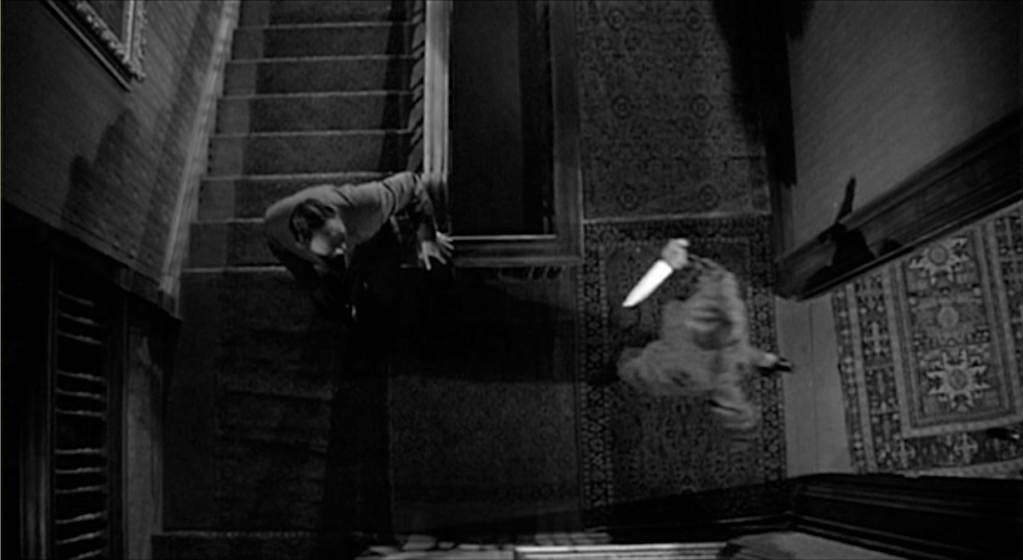 The second moment I would like to talk about is the second murder in the film, the death of Private Detective Mr. Arbogast. Most of the point I made previously are counted here such as the build up of tension after talking with Bates. Tension this time is built because of how we know that no one is allowed to talk to Bates' mother and that he is trespassing inside of the house. We see him walking up the stairs, step by step raising the tension, until once again and explosion happens. The crescendo of violins and murderer quickly appearing and disappearing.
The final point that I want to talk briefly about is the explanation at the end. Without spoiling the end, it provided a lot of 'oh yeah' and 'of course' moments and actually makes sense as to why these murders happened. I felt it was a satisfying ending to the film.
The entire film is shot in black and white due to the technical constraints when it was made. However, I feel that it wouldn't have given off the same vibe of awkward creepiness if it had instead been shot a few years later in Technicolor.
Hitchcock uses the camera to tell the plot. He shows many important plot points via the camera panning over to it, giving the audience information that the characters don't, making the tension rise because of how we know this information. This is typically called Dramatic Irony. For example, We know about Crane placing the money into the newspaper where as other characters don't.
In conclusion, I think that Psycho is a very interesting and influential film that I will always keep in mind when moving forward with my own film making. I will borrow aspects such as using camera angles to point out specific objects or places, i will also borrow techniques that were used to build tension such as Dramatic irony (the audience knowing things the characters don't).

Quite a useful analysis, in that you draw out some generic aspects that you could use in your own project - you need to provide another couple of film analyses in a similar way to illustrate your key findings and how you will apply them.
ReplyDelete